
Attendance after hours: $80–$180
The figure that gets a licensed plumber to your door at night. Quotable on the phone, every time.
The first thing that happens is not a booking. It is a plumber telling you what to shut off right now, because the minutes before anyone arrives are where most of the damage is either done or prevented.
The honest test is whether it is still getting worse while you wait. Water, waste or gas going somewhere it should not, and not stopping. A burst pipe, sewage backing up into the shower, a hot water tank emptying through the ceiling, or any smell of gas: those are emergencies, and waiting until morning multiplies the damage bill.
Then there is the category people apologise for calling about: the only toilet in the house blocked, no hot water with a newborn, a drain backing up the night before an inspection. Call anyway. An after-hours call here reaches a plumber, not a promise of one tomorrow.


Solid interwar and post-war homes still run original clay drains, which crack and sag with age and gradually trap debris until the line blocks.
Homes of this era were generally plumbed in copper with clay drainage, both laid well and both now decades past installation. Copper itself ages slowly; what fails is what joins it, and the flexible hoses added under sinks and vanities in later decades.
A failed flexi is the classic unattended flood, and it is also the cheapest thing in the house to have replaced before it happens. Worth doing on a quiet Saturday rather than meeting us on a wet one.
Enfield is a settled residential suburb in Sydney’s Inner West (postcode 2136), full of solid interwar and post-war brick homes on leafy blocks, bordering Croydon Park, Strathfield and Burwood. Its mature gardens and ageing sewer lines make it a suburb where blocked drains are a familiar call, and we know it well.
A drainage system laid a century ago was built for a household that used a fraction of the water yours does. Add a second bathroom, a dishwasher and a washing machine, and lines that coped for decades start showing where they are weakest.
That is not an argument for replacing everything. It is an argument for knowing which sections are actually tired, so the money goes into those rather than into the whole run on the assumption that old means finished.
Large established gardens shed leaves and silt that wash into drains and combine with kitchen grease to choke narrow older pipes.
A café or kitchen with a backed-up floor waste has a different problem from a household. There is a health standard to meet, staff arriving in a few hours, and a grease line that has usually been narrowing for months before the night it finally closes over.
We clear and jet trade waste lines after hours specifically so premises open on time, and we will tell you honestly whether tonight buys you a week or a year. If the line is glazed hard with old fat, the answer is a scheduled jet and a service interval — not another call-out at emergency rates next month.
Older drainage pits struggle in intense Sydney downpours, causing stormwater drains to back up into yards and low-lying garden beds.
A yard that floods in every serious downpour is a different problem from one that flooded once in a freak storm. The first is a blocked or undersized line and it will keep happening; the second is weather.
Telling them apart takes a camera on a dry day, not a guess in the rain. If it has happened twice, book the inspection between storms — clearing a surcharging pit at the height of it costs more and tells you less.
One slow basin is a local problem. Toilet, shower and floor waste misbehaving together means the shared line downstream, and on older earthenware that is the usual pattern.
Enfield’s leafy streets and mature trees drive roots into old clay sewers, the most frequent cause of the blockages we clear across the suburb.
It also changes the urgency. A single blocked fixture can wait for morning; a main line with nowhere to go will find the lowest opening in the house, and that is usually a floor waste in the bathroom.
Very few houses of this age are still on their original layout, and the junctions where a second bathroom or a rear extension was cut into a system sized for the original plan are a common failure point.
It is worth mentioning on the phone if you know the house has been added to. It changes where we look first, which on an after-hours call is most of the job.
Original earthenware gives way at the joints, and it rarely announces itself politely. Roots find the joint, the joint opens, and the section finally lets go on a night with the house full and one bathroom working.
Old pipe is not automatically bad pipe. But when a heritage-era line fails once, it is worth knowing whether you have had one bad joint or a tired run. We clear it, camera it before we leave, and you keep the footage — so any decision about relining is yours to make on evidence rather than on our word.
The figure that gets a licensed plumber to your door at night. Quotable on the phone, every time.
Business hours run about $120–$160. The premium is real and every genuine after-hours outfit charges one.
Attendance plus the first stretch of work plus minor parts. An isolated burst, a blocked toilet, a failed valve.
Slab leaks, gas faults, anything structural at 2am. Quoted before it starts, in writing.
The cheapest outcome, and one we give often. Describe it honestly and we will tell you which side of the line it is on.
The price is agreed before work starts, including at 2am. Figures here are indicative of the 2026 Sydney market rather than a quote from us, you get your own number as a fixed price before any work starts.

Not a call centre. You describe what is happening, we tell you what to shut off right now, and whether this genuinely needs someone tonight. Sometimes it does not, and we say so.
The nearest available crew heads for Enfield with the common failure points already stocked on the van: pipe, fittings, valves, drain gear.
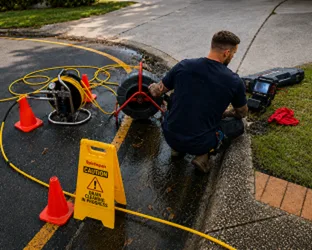
First job on site is stopping the damage: isolate, contain, make safe. Then you get a fixed price for the proper repair before it starts.

Most emergencies are permanently repaired on the spot. If a part has to wait for a supplier, you are left safe, watertight and functioning in the meantime.
Describe what it is doing and we will tell you honestly whether it needs a van now or costs less on Monday.
Ring us and a plumber picks up. Leave details instead and you will get a callback with an ETA, not a sales call.

Leave your details and our local Enfield team will call you back fast.